Punjab Jobs
Redesigning Punjab’s employment platform for 500,000+ job seekers
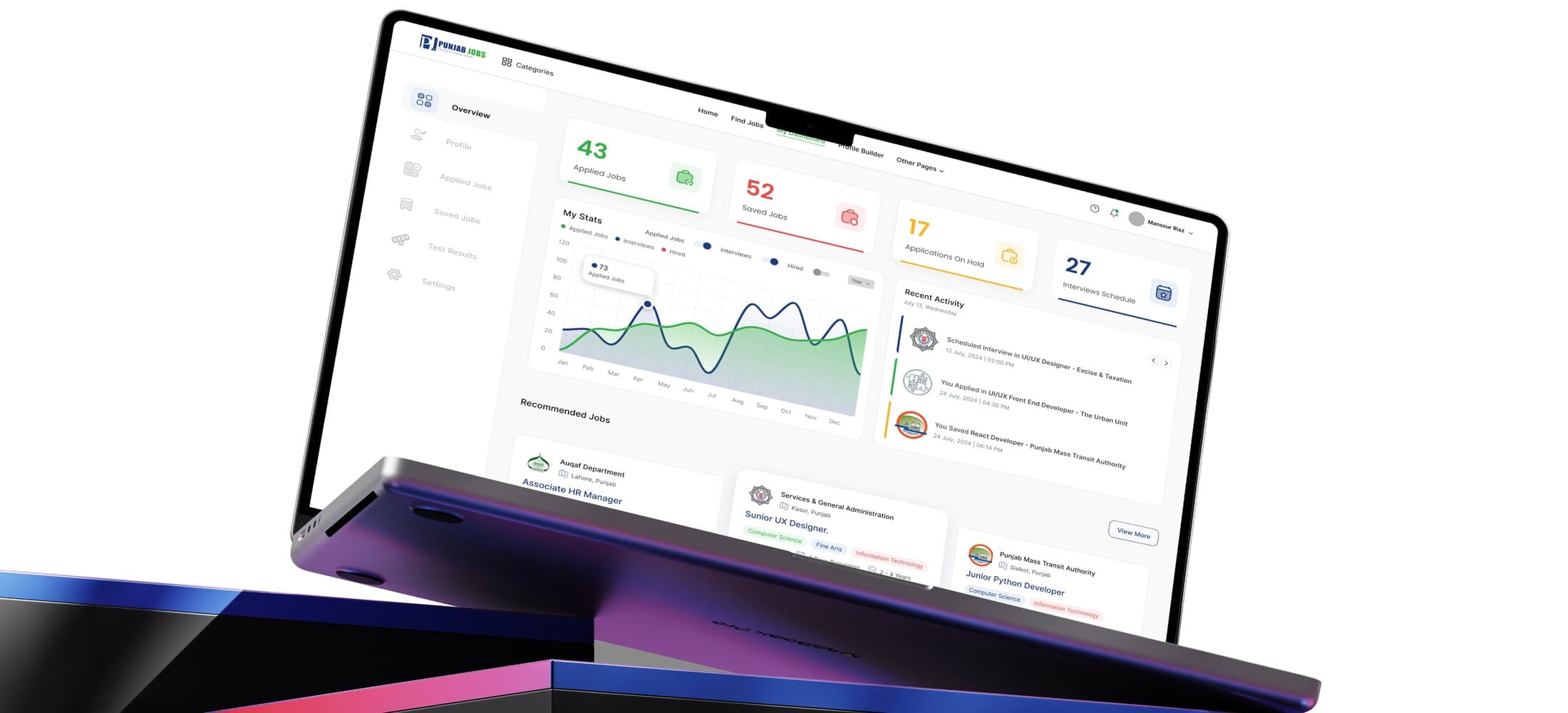
Client
PITB
Role
Program Manager, Design
Team
2–5 people
Scope
Web, Recruiter Module, App
Timeline
May–Aug 2024
The challenge
A portal with 2 million applications and a terrible experience. 500,000+ registered users, 168 government departments, 11,000+ job postings, and an interface that made finding a job harder, not easier.
The demand was never the problem. Citizens depended on jobs.punjab.gov.pk because there was no alternative for government employment. But the experience was actively hostile: cluttered job cards missing salary info, a 10-tab CV builder, no mobile app, and recruiters managing everything through spreadsheets and email.
Pre-design baseline
registered job seekers
applications submitted since 2017
postings from 168 departments
Before: what was broken
• Job cards missing salary info
• 10-tab CV builder
• No mobile app
• No error handling during apply
• Recruiters on spreadsheets
• Cluttered layout with ads
Two audiences, two personas
Aryan Khan
Job seeker · Early 30s
Tech: High · Searches on phone
Tech-savvy professional searching for government jobs during his commute. Frustrated by inconsistent interfaces and zero feedback after applying.
Goals
• Salary info upfront on job cards
• Simple CV builder, not 10 tabs
• Mobile app for search on the go
Pain points
• No feedback after applying
• Can’t identify what went wrong
• Inconsistent interface wastes time
“I search for jobs on my commute. The portal doesn’t even work on my phone.”
Ahmed Adeel Sarwar
Director HR · PITB
Age: Mid 30s · Tech: Medium
Director HR managing recruitment across 168 departments. Lives in spreadsheets and email chains. Needs a centralized system.
Goals
• Full pipeline view (Pending/Rejected/Hired)
• Coordinate with department hiring managers
• Generate recruitment reports instantly
Pain points
• No centralized application pipeline
• Tracking candidates in spreadsheets
• Can’t collaborate with hiring managers
• Reports take hours to generate
“I manage hiring for 168 departments with Excel and email. Every position is a new spreadsheet.”
After: two audiences, one design language, zero compromise
Job seeker experience
Simplicity & speed
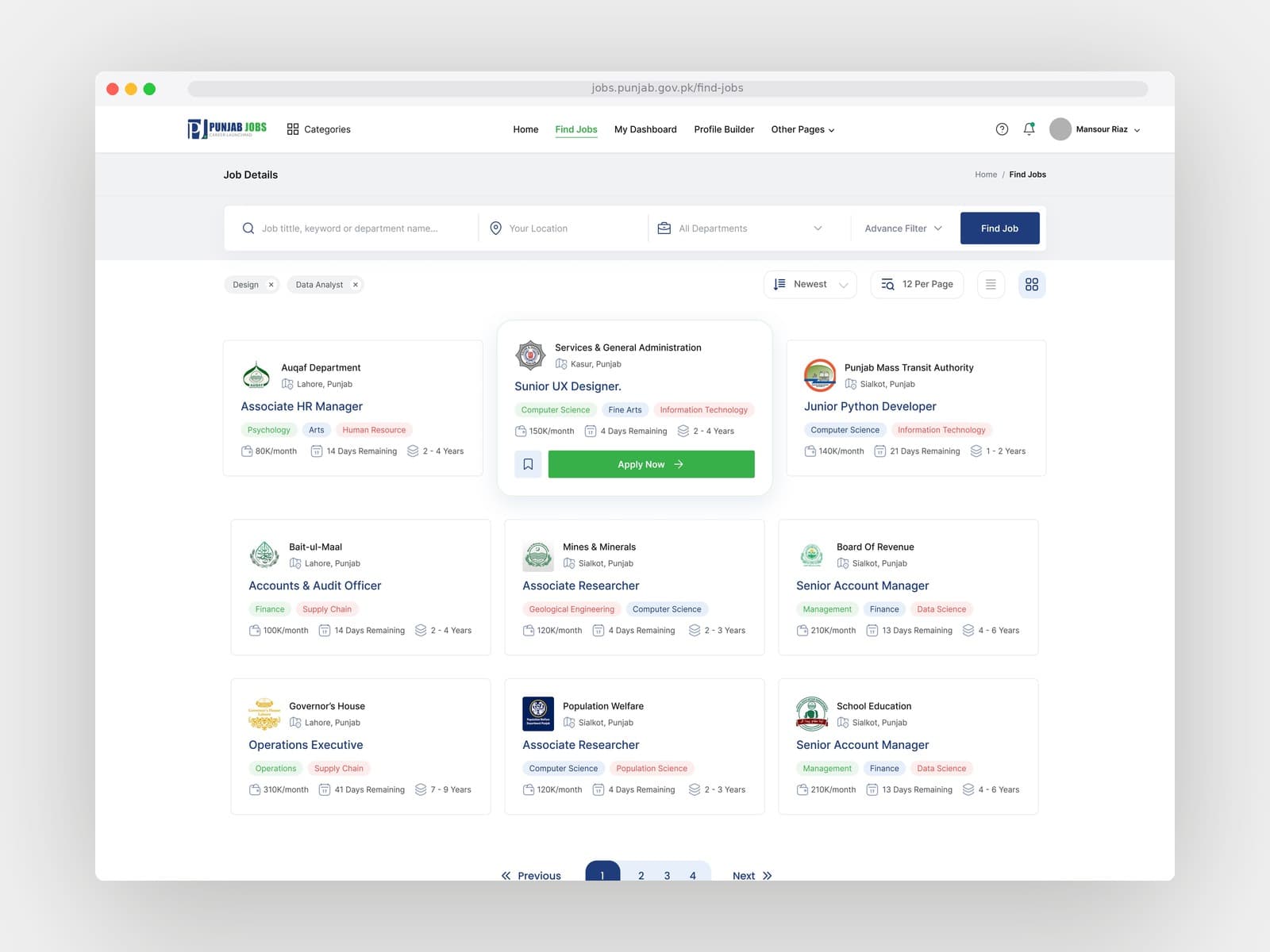
• Redesigned cards with salary
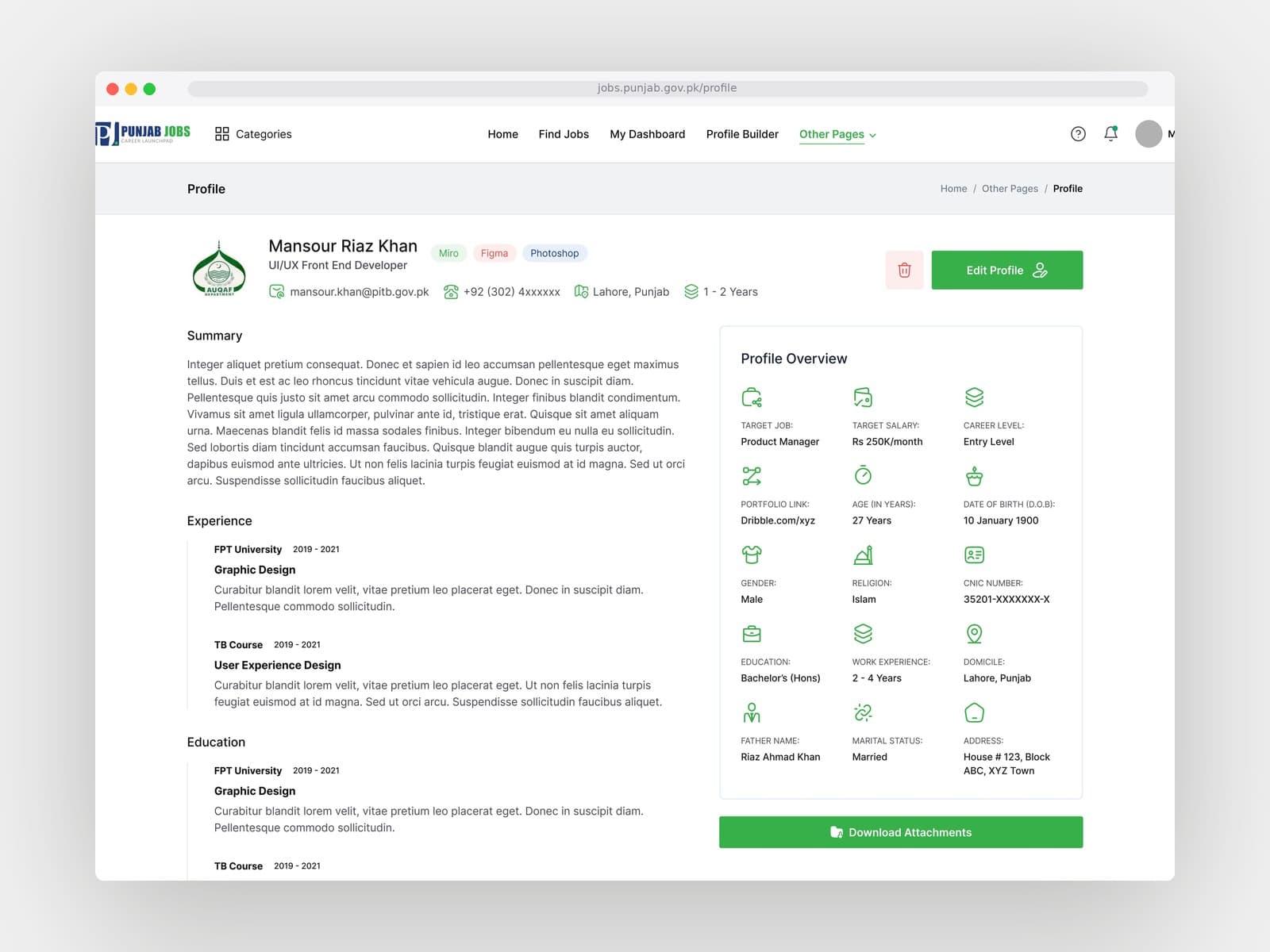
• Streamlined CV builder
• Basic / Advanced filters
• Native mobile app
Recruiter experience
Depth & control
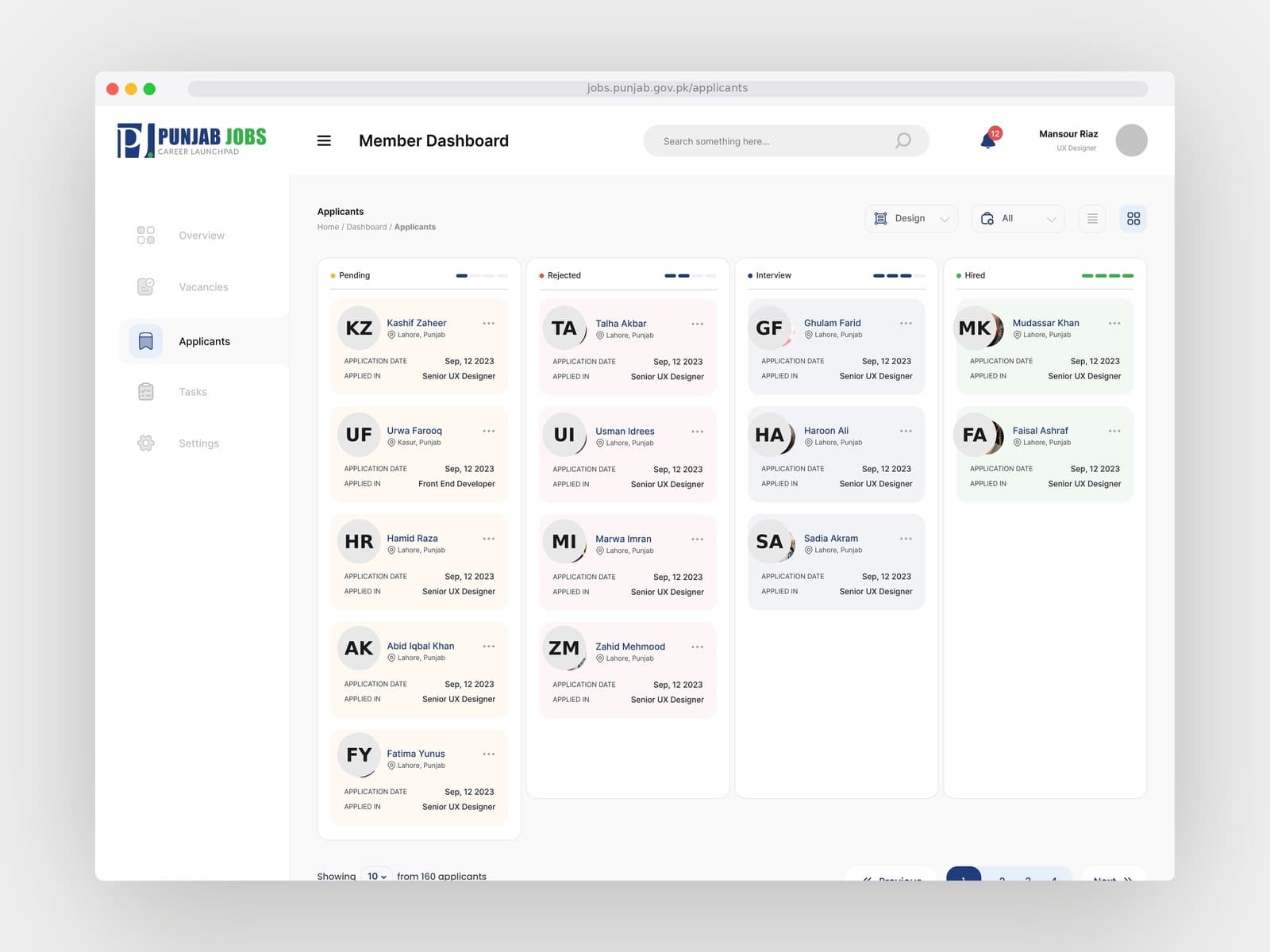
• Centralized applicant tracking
• Pipeline view with statuses
• Quick-view with PDF viewer
• Bulk actions & reporting
Salary, cards, save
Indeed
Quick apply, filters
Punjab Jobs (old)
Baseline: what to fix
Key design decisions
Redesigned job cards with salary, icons, and full clickability
Competitive benchmarking against LinkedIn and Indeed revealed salary info as the biggest gap. New cards show title, location, deadline, and compensation with intuitive iconography. The entire card is clickable.
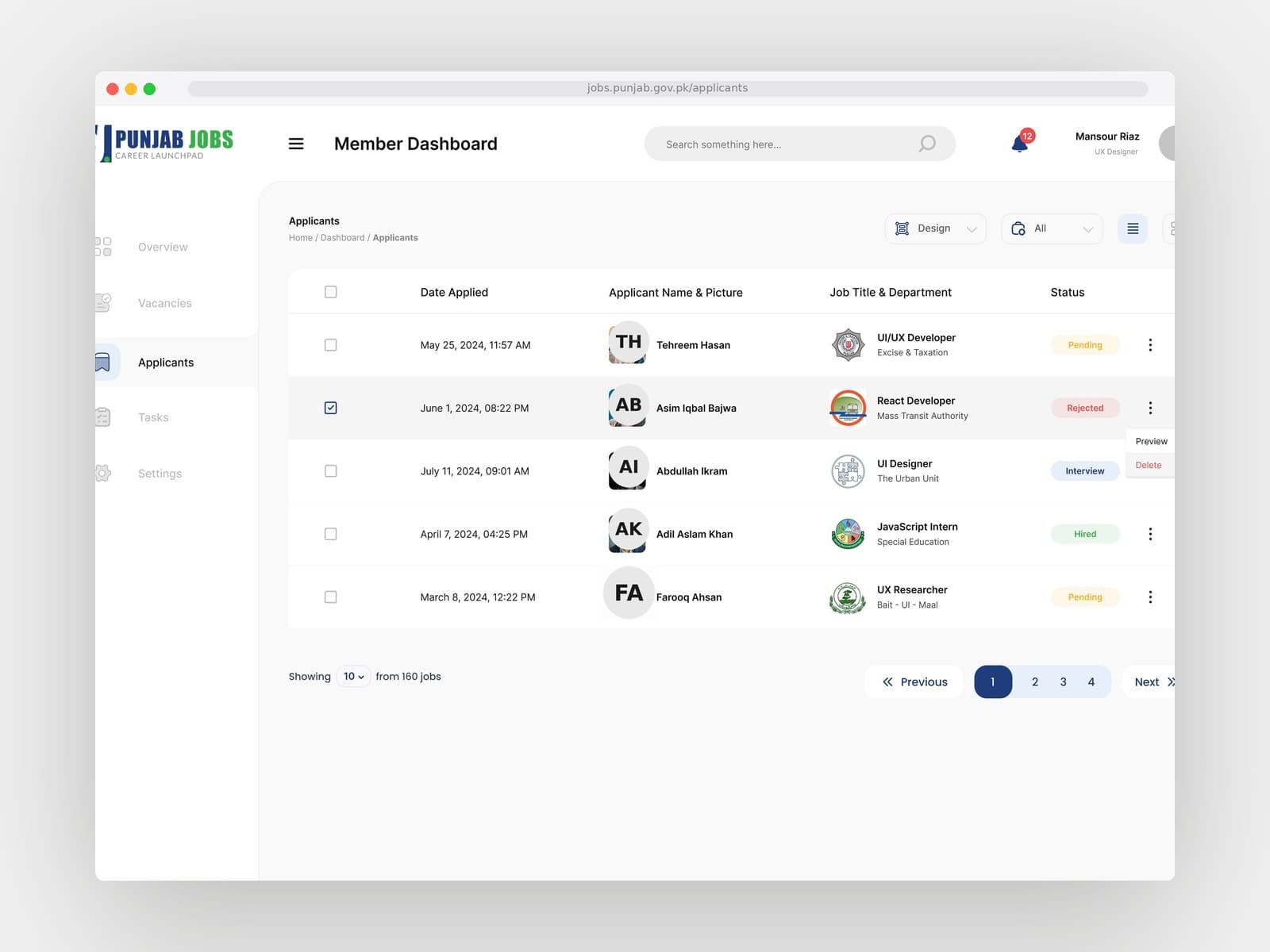
Built a recruitment module that replaces spreadsheets
Categorized applications (Pending/Rejected/Hired), quick-view with PDF viewer, full candidate timeline, and simplified scheduling. This wasn’t a feature. It was filling a product gap that was crippling hiring efficiency.
Two audiences, zero compromise
Job seekers get simplicity (clean cards, Basic/Advanced filters, streamlined CV builder). Recruiters get power (dense applicant views, collaboration tools, bulk actions). Same design language, different information densities.
Status
Design completed and handed off for implementation. The baseline metrics (500K+ users, 2M+ applications, 168 departments) serve as the benchmark against which the redesign’s impact will be measured.
Reflection
Redesign is harder than greenfield. Every decision is measured against what already exists. And competitive benchmarking is underrated as a research method: in resource-constrained projects, patterns validated by billions of interactions on LinkedIn and Indeed are a pragmatic and defensible foundation.