Punjab AQI
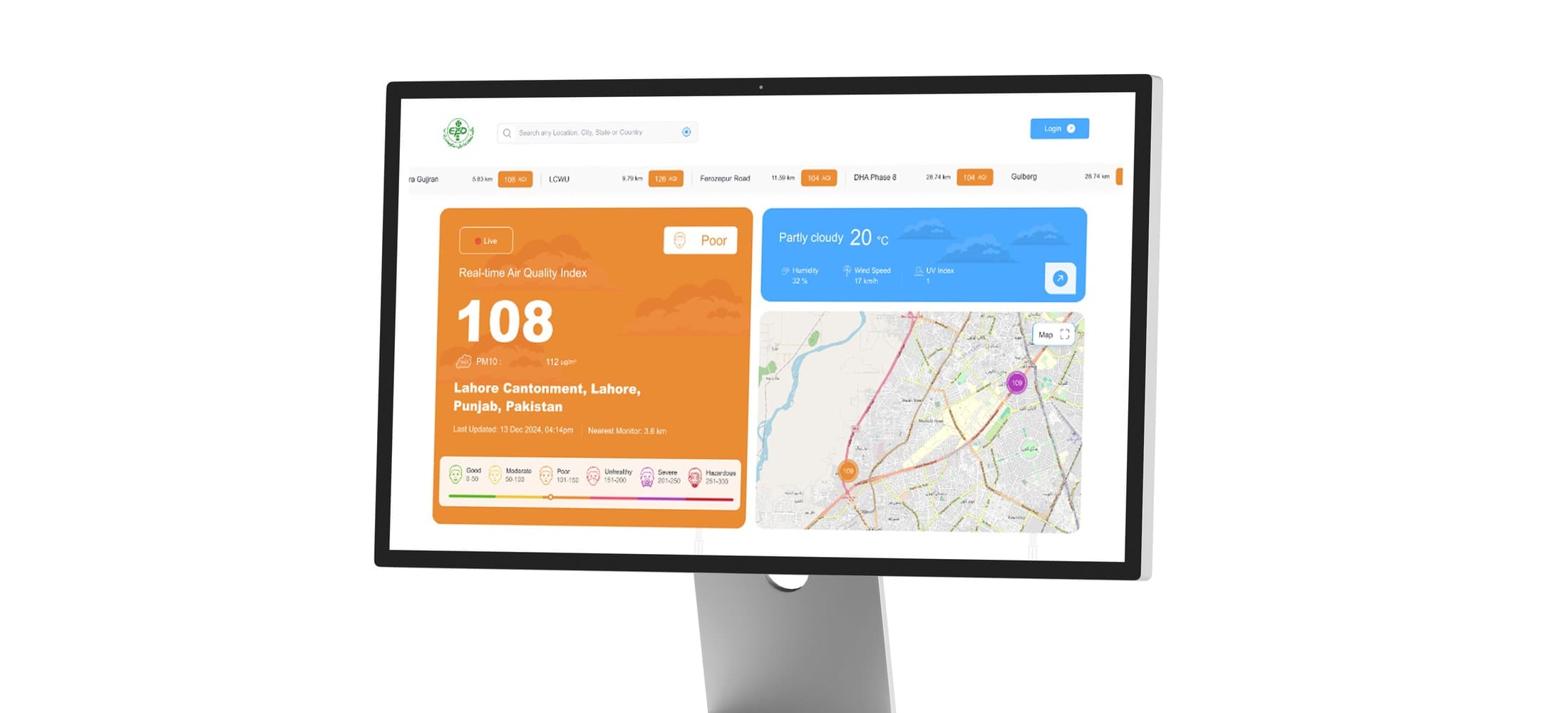
Making invisible air visible: real-time environmental monitoring for 36 districts
Client
EPD, Government of Punjab
Role
Program Manager, Design
Team
2–5 people
Platform
Web Dashboard
Coverage
36 districts
The challenge
Lahore’s AQI regularly exceeds 250, “Very Unhealthy.” But what does that mean for a mother deciding whether to send her children to school? For an asthma patient planning their day? Raw numbers don’t protect people. Understanding does.
Punjab had no comprehensive government-backed air quality platform. Basic tools existed, but nothing that gave citizens a unified, district-level view of what they were breathing, how it compared across cities, how it changed over time, or what they should do about it based on their personal health conditions.
The design challenge: bridging three gaps
194
Raw number
Means nothing on its own
194
Color = severity
Instant comprehension
Asthma alert
Personalized action
Protects people
Color as communication: the universal language
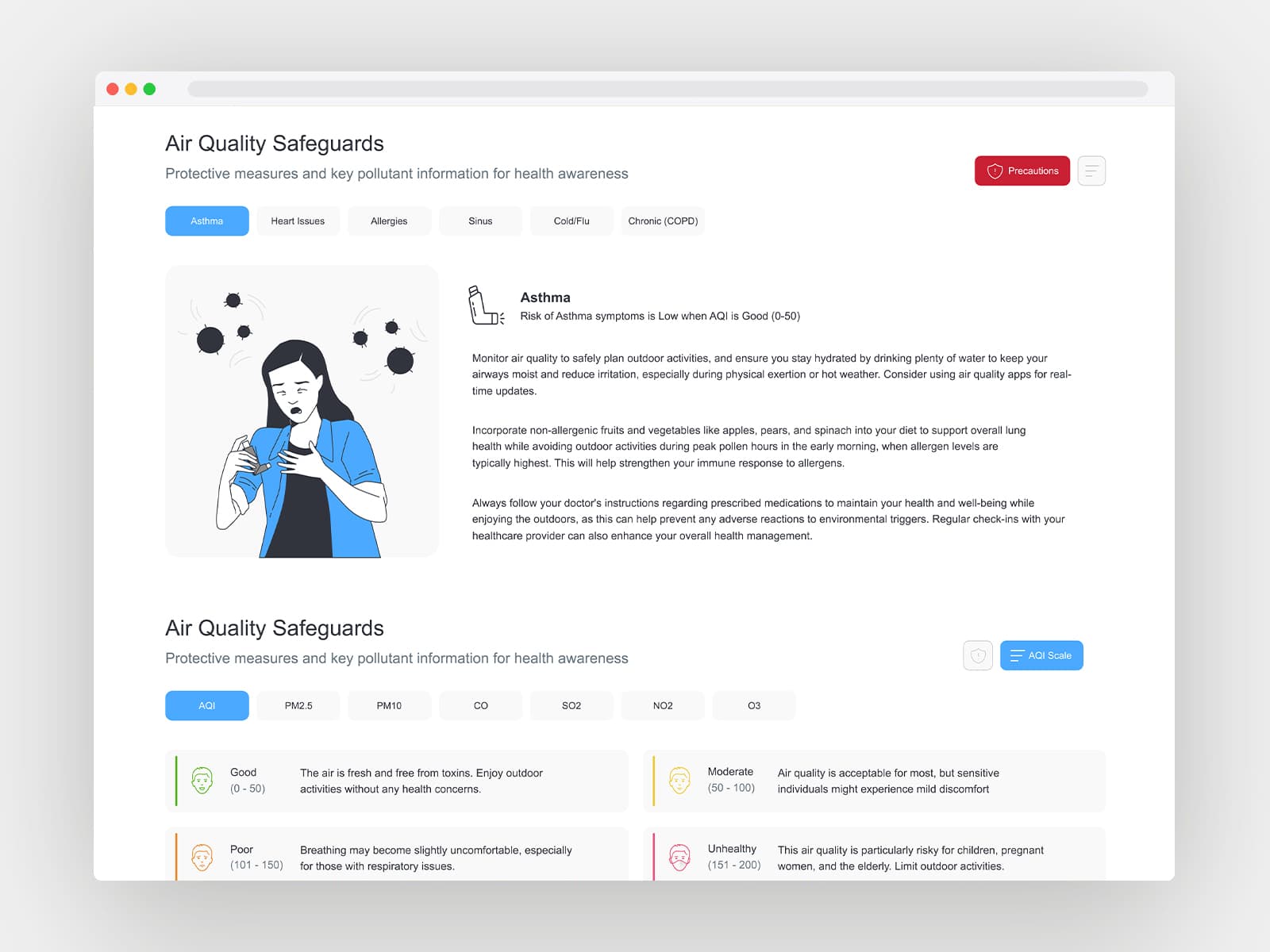
Health precautions by condition: design that protects people
Asthma
Heart
Allergies
Sinus
Cold/Flu
COPD
Same AQI level, different advice per condition. Designed with EPD domain experts.
5 modules: layered information disclosure
Dashboard
Real-time map, city cards
For: everyone
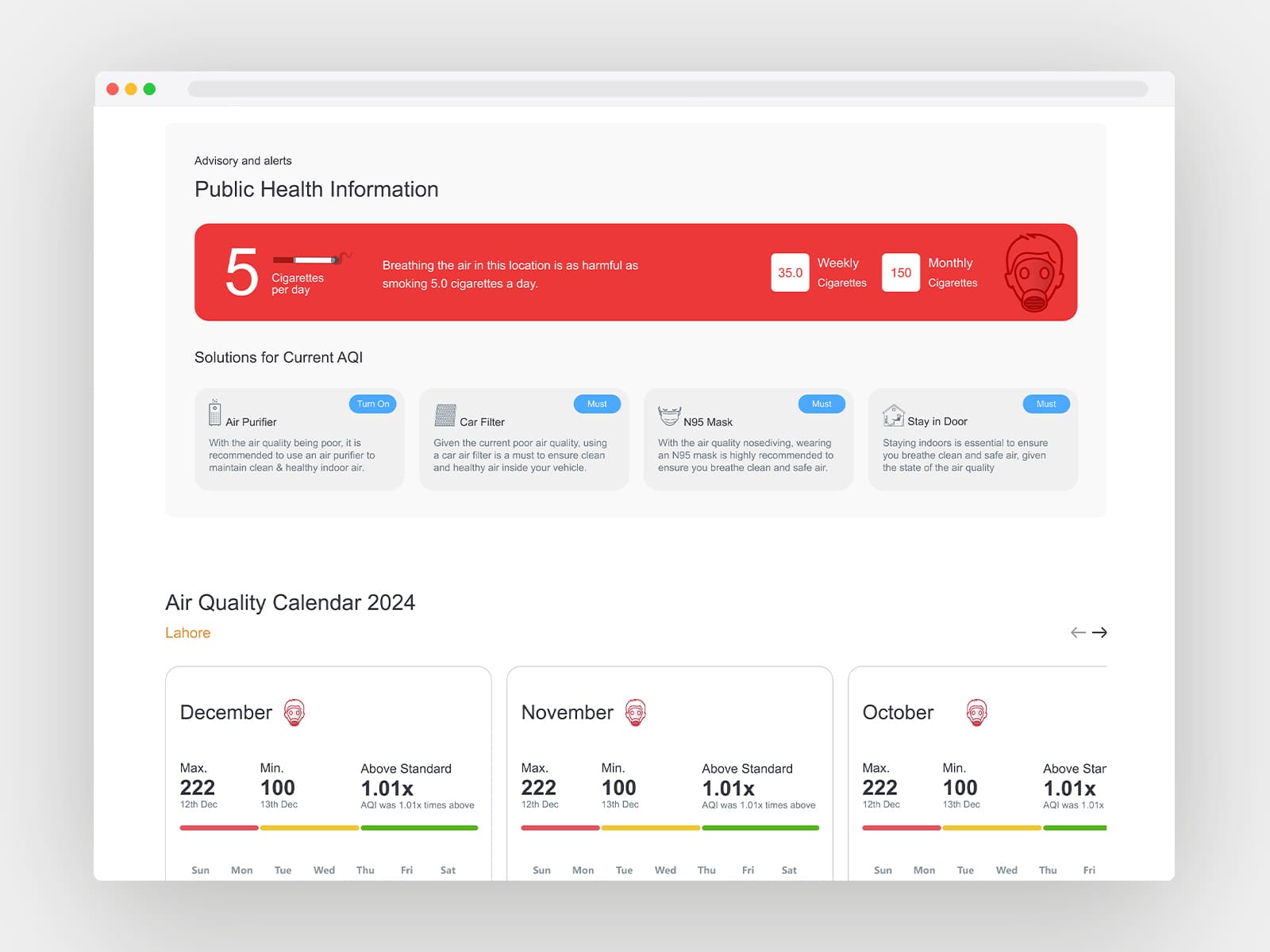
Historical
Heatmap calendar, daily AQI
For: pattern seekers
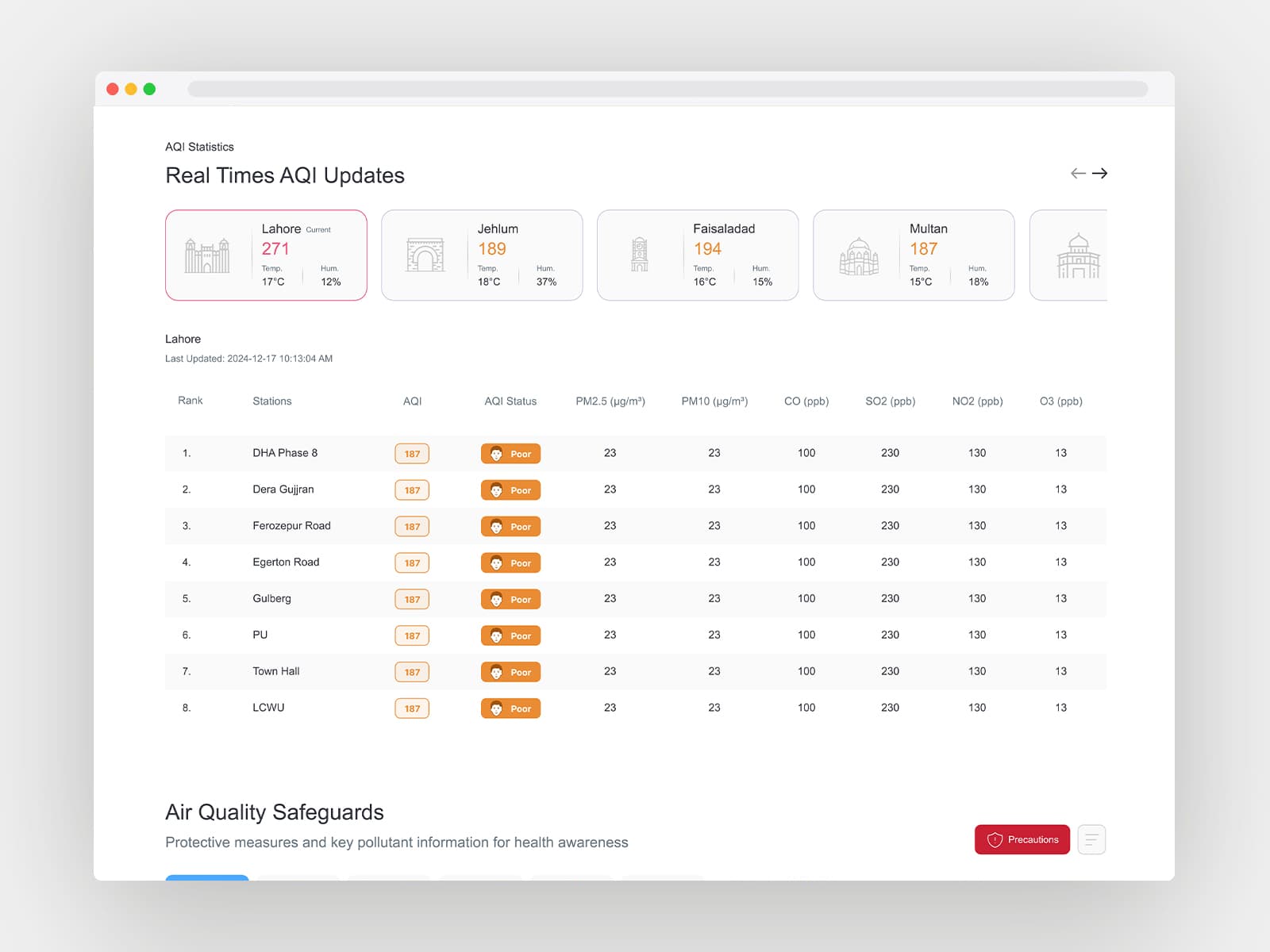
Statistics
Station-level pollutants
For: researchers
Safeguards
Health precautions
For: patients
Trends
Annual calendar, patterns
For: policymakers
Key design decisions
Color as communication
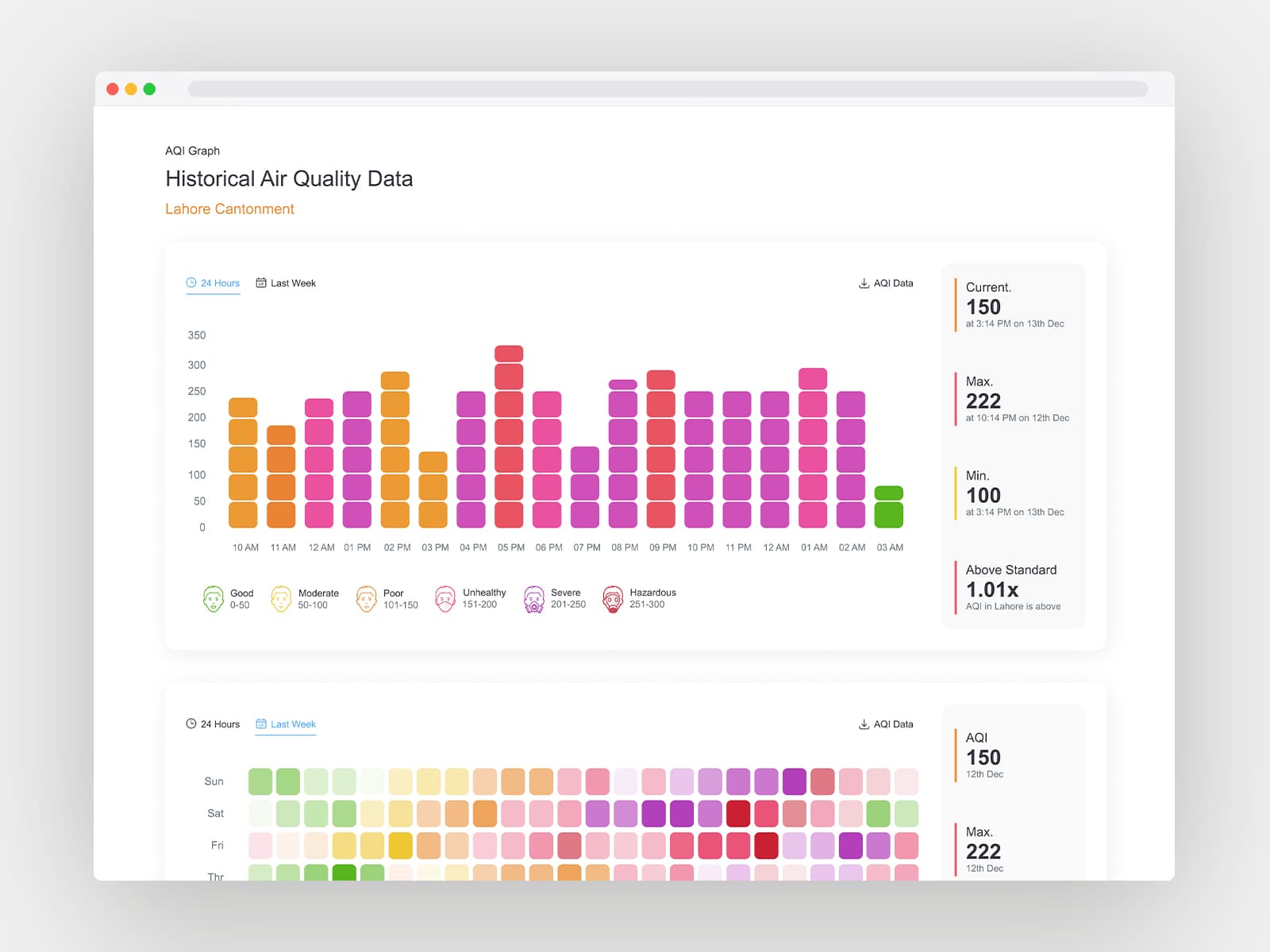
Every AQI reading is wrapped in a severity color (green → yellow → orange → red → purple → maroon) following international standards. Applied consistently across every module: dashboard, statistics, historical calendar, health advisories. A citizen never needs to memorize what “194” means; the color tells them instantly.
The heatmap calendar
365 data points in a single view: every day of the year colored by AQI severity. Citizens can instantly see that November through February is a wall of red (smog season). Alongside: average AQI, maximum, minimum, and days above standard. Pattern recognition without instruction.
Health precautions by condition
The hardest design challenge. Condition-specific advice for Asthma, Heart Issues, Allergies, Sinus, Cold/Flu, and COPD, calibrated to current AQI levels. This transforms the platform from a monitoring tool into a health advisory service. Designed with EPD’s domain experts to ensure accuracy.
Coverage
districts monitored
pollutants tracked in real-time
modules: dashboard, history, stats, health, trends
Design completed and delivered as implementation-ready specifications. In active development when I transitioned from PITB.
Reflection
The gap between data and action is where design lives. Showing someone AQI is 271 is data. Coloring it purple is communication. Telling an asthma patient to keep rescue medication accessible is actionable design. Environmental design carries moral weight: when you’re designing for a region with some of the worst air pollution on earth, every decision affects people’s respiratory health.