Maryam Ki
Dastak
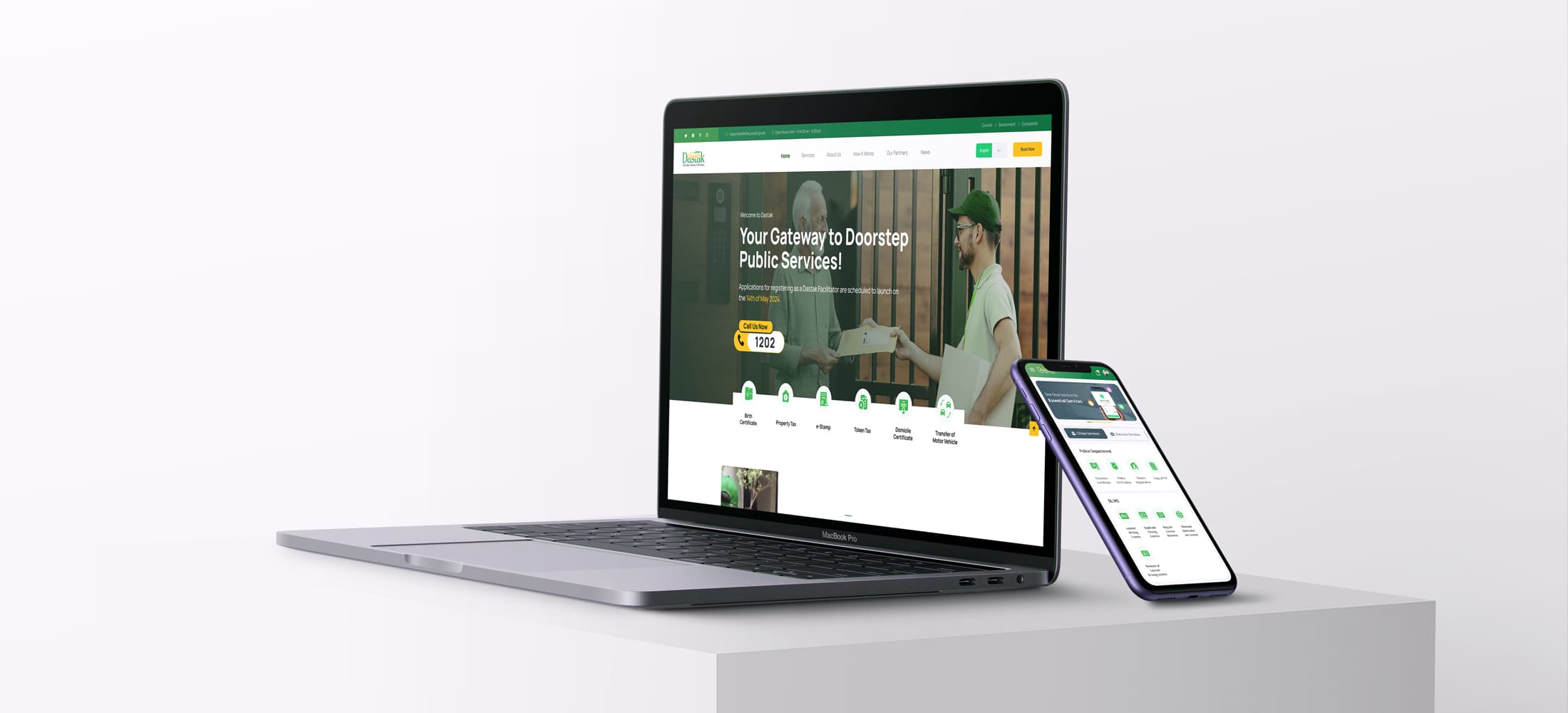
Delivering government services to people’s doorsteps across Punjab
Client
Government of Punjab
Role
Principal UX/UI Designer
Team
20+ people
Platforms
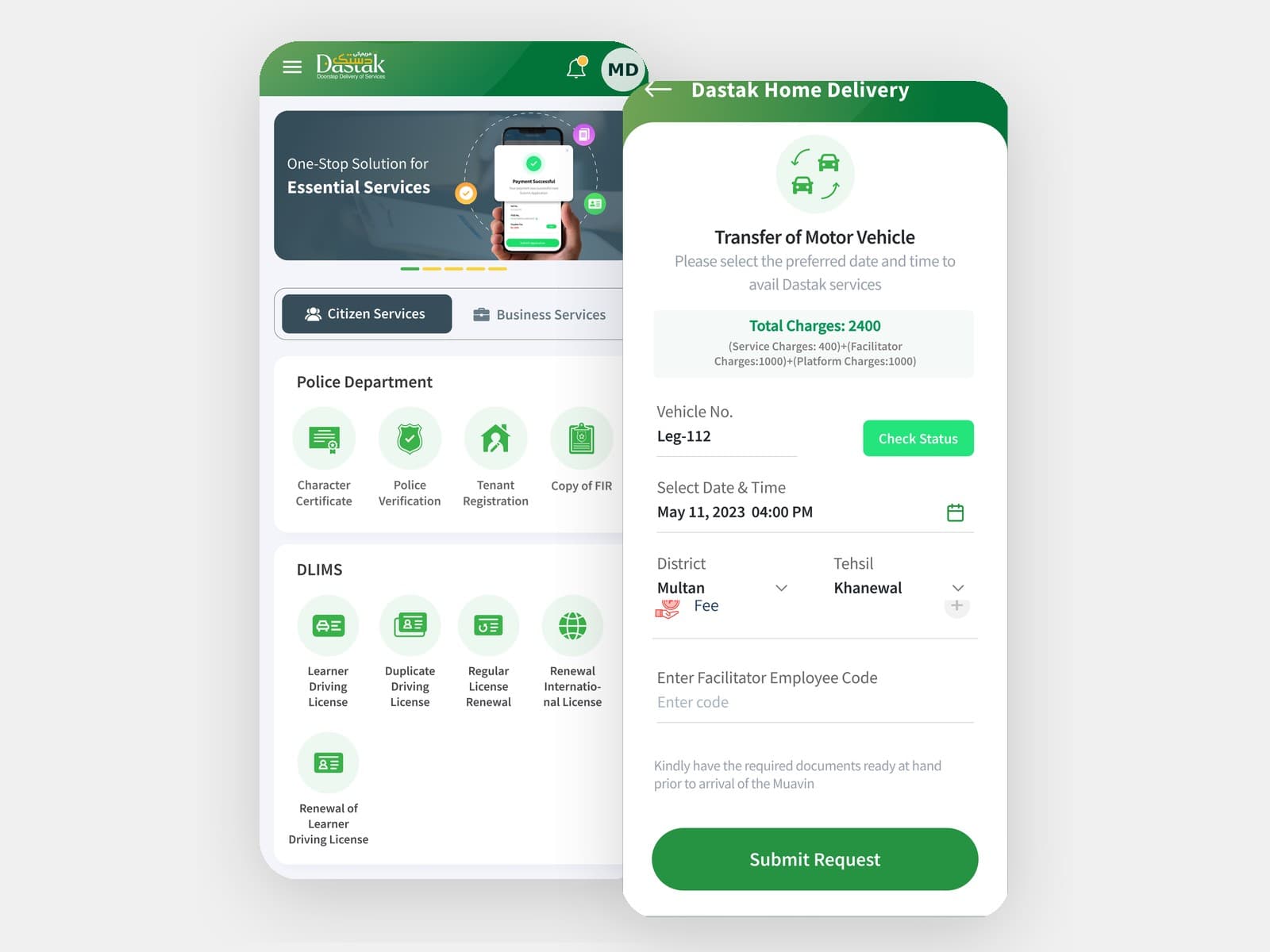
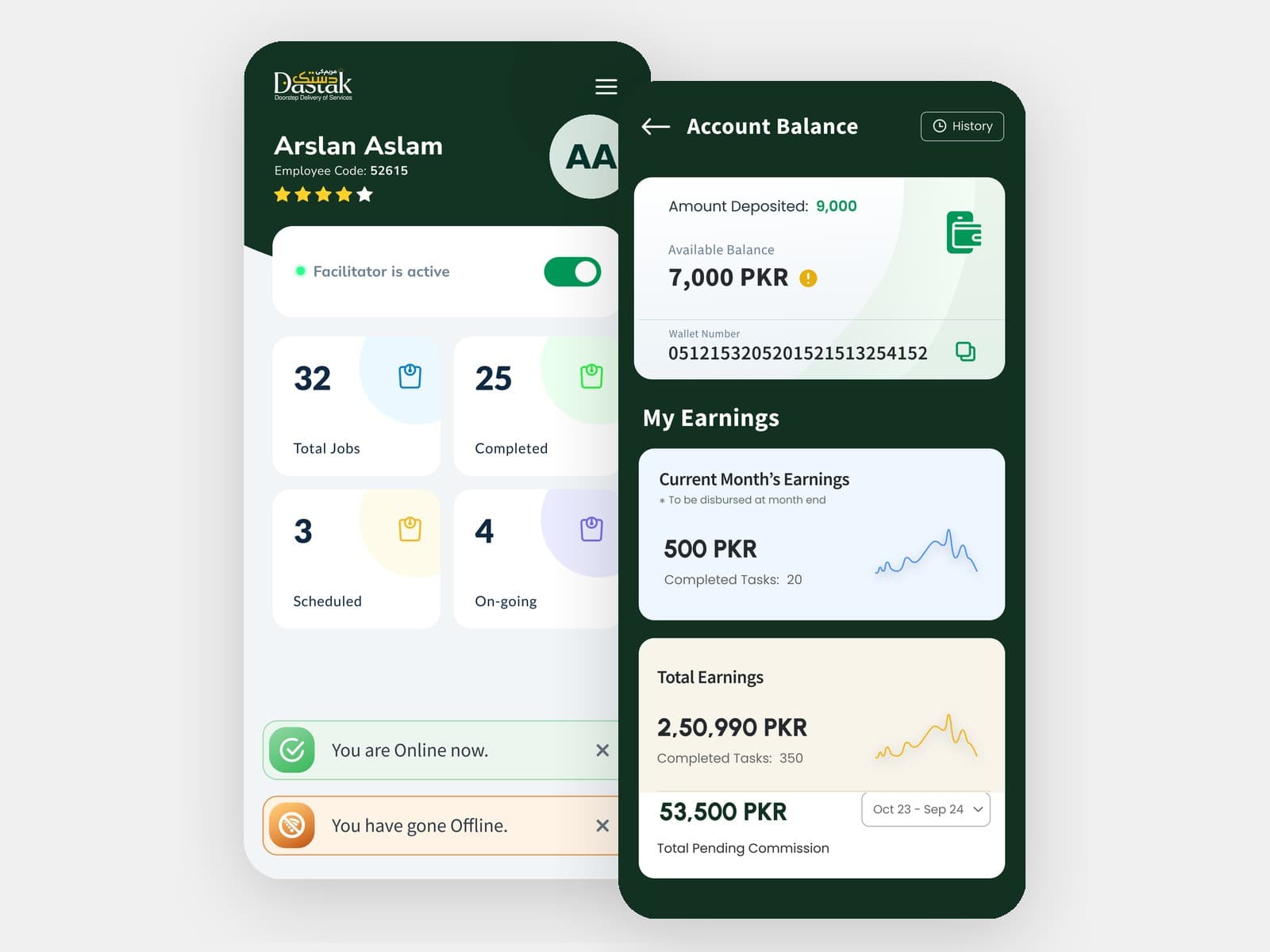
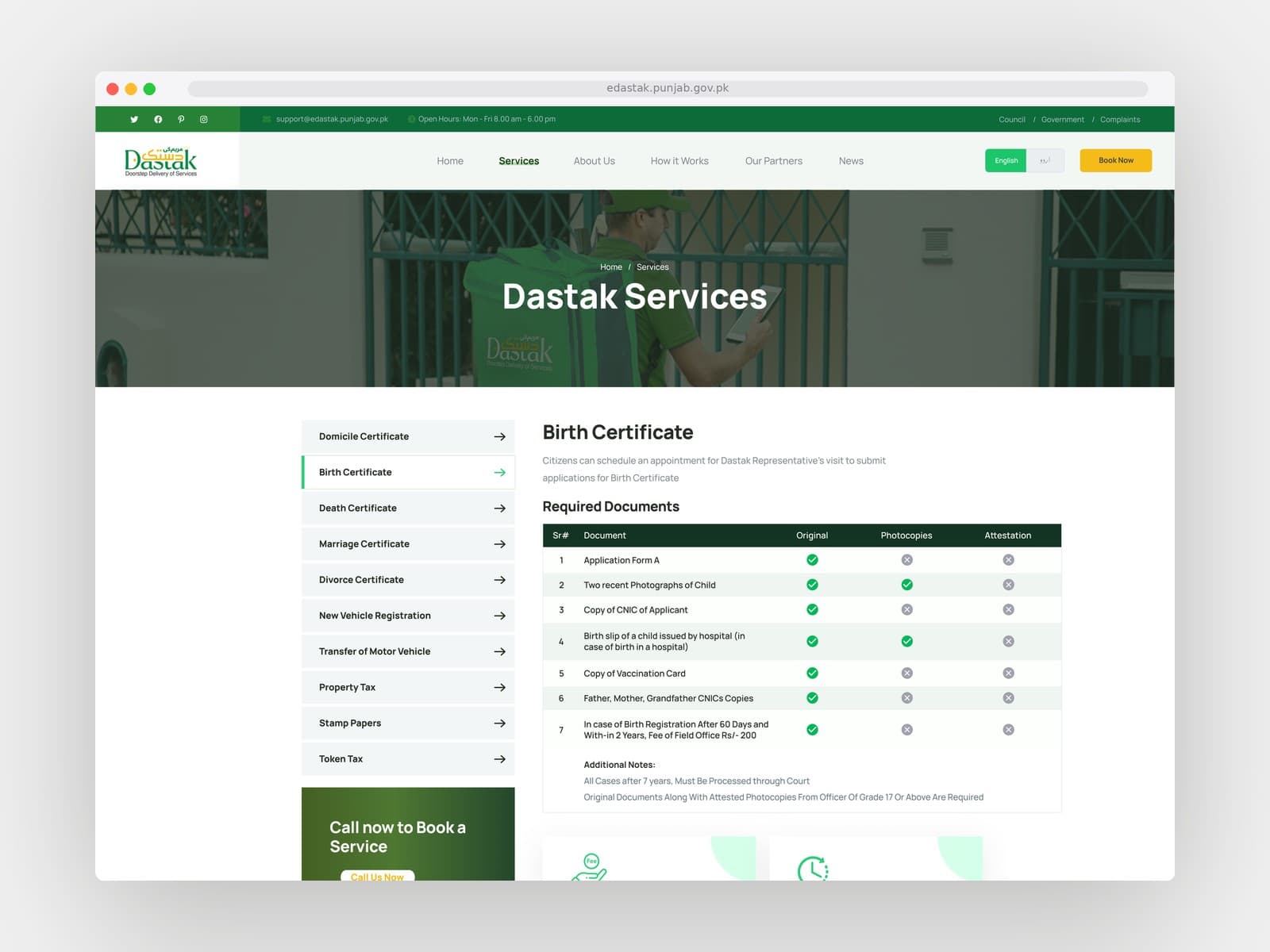
Web, Mobile, CRM
Timeline
May–Aug 2023
The challenge
What if a single mother who needs a birth certificate didn’t have to take a day off work, travel miles to a government office, and wait hours, only to be told she needs another document?
Before Dastak, accessing government services in Punjab meant one thing: going to a government office in person. No digital option existed. For 110 million citizens, especially in rural areas, this was a genuine barrier to accessing their rights.
Dastak was designed to eliminate that barrier entirely: five interconnected platforms, built from scratch in three months, to deliver services directly to citizens’ doorsteps through a network of government-approved facilitators.
How Dastak works: end-to-end service delivery
1. Citizen
Requests service
2. CRM
Routes & assigns
3. Facilitator
Visits doorstep
4. Delivered
Verified & closed
Selects from 76 services. No login required, just CNIC & phone number.
Accessibility-first
Auto-assigns nearest facilitator by district, service type, and load.
Like ride-hailing for government services
Receives assignment on mobile app. Visits citizen, collects docs, processes.
No office visit needed
Document delivered to citizen's door. Status updated, feedback collected.
No paperwork lost
Key design decisions
No login required for service booking
A deliberate accessibility decision. CNIC-based identification with SMS OTP removes every barrier for first-time digital users. Every additional registration step is a drop-off point for citizens who’ve never booked a government service online.
Automated dispatch with manual fallback
Citizens book → nearby facilitators get alerts (like ride-hailing) → automated assignment. If no one accepts, the call center manually assigns. This ensured no request went unfulfilled, even in early stages with low facilitator density.
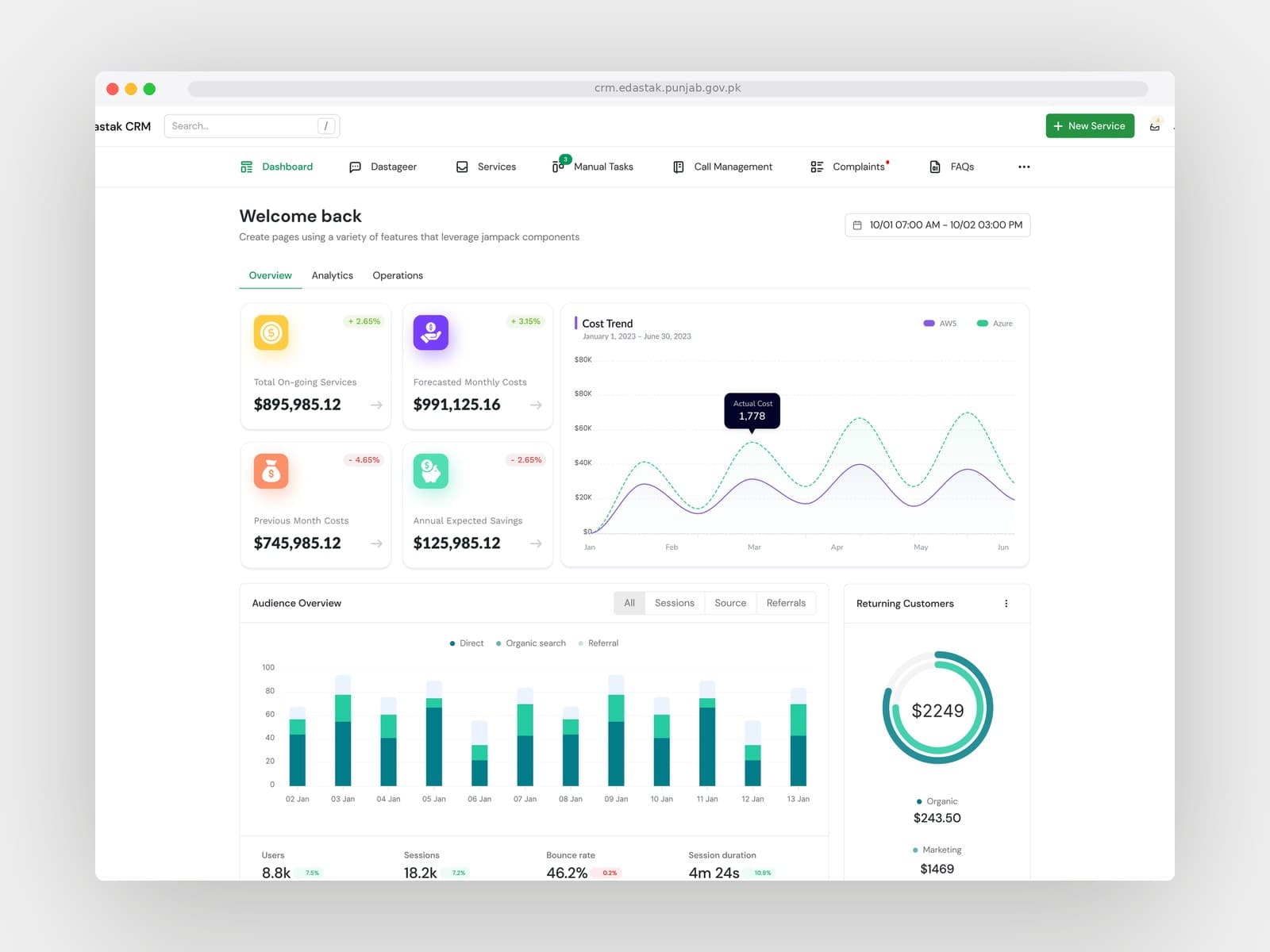
Five modules, one design language
As design strategist across 20+ people, I established a shared framework (common patterns, consistent terminology, unified information architecture) so that a citizen’s booking flows seamlessly through CRM to facilitator to delivery.
Impact
citizen requests submitted
facilitators registered
districts covered
services available
requests processed
from 1 to 22 districts
Reflection
Design for the ecosystem, not the screen. In complex systems, the connections between modules matter more than any individual interface. And accessibility isn’t a feature. It’s the foundation: the no-login decision, the helpline alternative, the SMS verification were all deliberate choices to serve citizens who’d never used a digital government service.